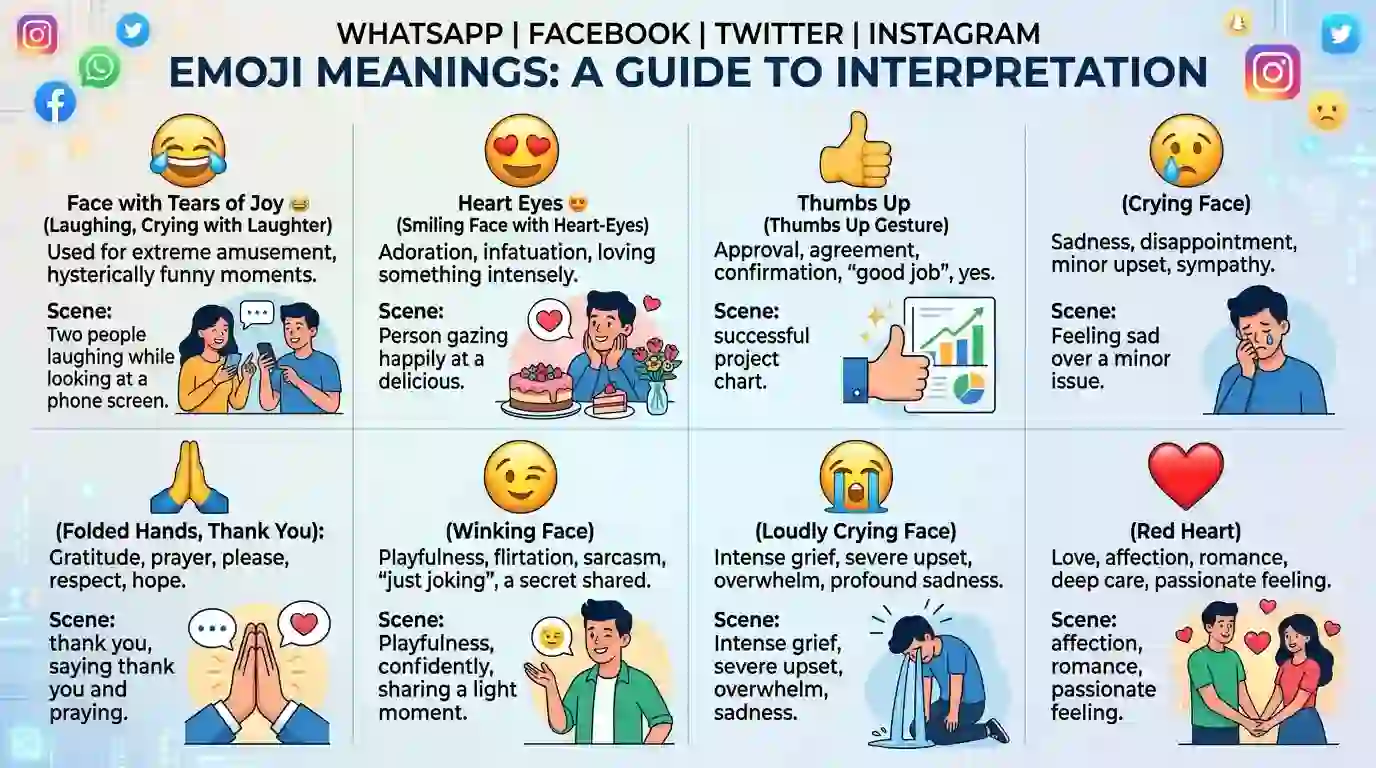
“What does this emoji mean?” depends on the symbol and the context in which someone uses it. An emoji can express happiness, love, sadness, humor, sarcasm, or another feeling. Its meaning may change based on the surrounding words, the relationship between people, and current online trends. Check the full message before deciding what the sender intends.
Key Takeaways
- Emojis add emotion, tone, reactions, and visual meaning to digital messages.
- The same emoji can have different meanings in different conversations.
- An emoji’s official name may differ from its popular slang meaning.
- The words surrounding an emoji often help explain its intended meaning.
- Emoji dictionaries can help you identify unfamiliar symbols and their common uses.
What Does an Emoji Mean in a Text?
An emoji is a small digital picture or symbol that people use in text messages, comments, captions, and online conversations. It can represent a facial expression, an object, an activity, an emotion, or an idea.
For example, someone might send 😊 to show warmth, 😂 to express laughter, or ❤️ to communicate love and affection. These are common interpretations, but they do not guarantee exactly what a sender feels.
Consider this message:
“Thanks for helping me today 😊”
Here, the smiling face adds a friendly, appreciative tone. Without it, the message would still express gratitude, but it might feel less personal.
Now consider:
“Okay 🙂”
Depending on the conversation, this could be a simple acknowledgment, a polite response, or an expression of restrained frustration. You cannot reliably determine the sender’s feelings from the emoji alone.
If you searched “what does this emoji mean,” the best first step is to identify the symbol and then consider the message in which it appears.
Common Emoji Meanings and Examples
The following examples explain several familiar emojis and how people commonly use them in everyday communication.
Face and Emotion Emojis
Common interpretations, not fixed definitions.
| Emoji | Official or common name | Common meaning |
|---|---|---|
| 😀 | Grinning Face | Happiness or friendliness |
| 😂 | Face with Tears of Joy | Strong laughter or amusement |
| 🥹 | Face Holding Back Tears | Feeling touched, grateful, or emotional |
| 🥰 | Smiling Face with Hearts | Affection, warmth, or love |
| 😭 | Loudly Crying Face | Sadness, intense emotion, or exaggerated laughter |
| 😏 | Smirking Face | Confidence, teasing, or possible flirtation |
| 🙃 | Upside-Down Face | Playfulness, irony, or sarcasm |
| 🤔 | Thinking Face | Curiosity, doubt, or consideration |
For example, a friend might respond with 😭 after you share a hilarious story. They may mean that they are laughing uncontrollably rather than feeling sad.
Similarly, 🥹 can express genuine emotion when someone receives good news. In another conversation, it may communicate a cute, pleading reaction.
Heart and Love Emojis
Heart emojis can express affection, appreciation, friendship, support, or romantic interest.
| Emoji | Common interpretation |
|---|---|
| ❤️ | Love, affection, or strong appreciation |
| 🩷 | Sweetness, affection, or warmth |
| 💛 | Friendship, happiness, or care |
| 💚 | Nature, support, or affection |
| 💙 | Trust, friendship, or support |
| 🖤 | Dark humor, grief, style, or affection |
| 🤍 | Peace, care, simplicity, or sympathy |
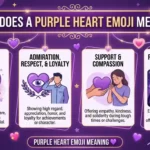
| 💜 | Affection, support, or admiration |
These meanings overlap. A red heart from a romantic partner may express love, while the same heart from a friend may simply show appreciation.
Heart colors do not have universal emotional definitions. To understand one, consider your relationship with the sender and what you were discussing.
Popular Slang and Reaction Emojis
Some emojis have developed popular internet meanings beyond their literal appearance.
| Emoji | Common online interpretation | Example |
|---|---|---|
| 💀 | Something is extremely funny | “That video took me out 💀” |
| 🔥 | Excellent, exciting, or impressive | “Your new profile looks 🔥” |
| 👀 | Interest, curiosity, or watching closely | “You have news? 👀” |
| ✨ | Emphasis, excitement, or playful styling | “A fresh start ✨” |
| 🤡 | Foolish behavior or self-mockery | “I trusted that promise 🤡” |
| 🫠 | Embarrassment, exhaustion, or feeling overwhelmed | “I forgot my presentation 🫠” |
| 💅 | Confidence, sass, or an unbothered attitude | “I said what I said 💅” |
| 🙏 | Prayer, thanks, or a request | “Please wish me luck 🙏” |
For instance, 💀 literally represents a skull, but online it can express intense amusement. The sender is not necessarily discussing death.
These examples illustrate why knowing an emoji’s picture is only the beginning. Internet slang can give a familiar symbol a different meaning.
Why the Same Emoji Can Have Different Meanings
An emoji does not always communicate one specific emotion. Three important factors can change how people interpret it.
Context and Relationships
The surrounding words often provide the strongest clues.
Imagine receiving “You actually did it 😂” from a friend after completing a difficult challenge. The emoji probably expresses amusement or excitement.
Now imagine receiving the same message after making an obvious mistake. It could communicate teasing or playful embarrassment.
Your relationship also matters. A heart from a family member, close friend, coworker, or romantic partner may carry different emotional weight.
Culture, Trends, and Age Groups
Online communities sometimes develop their own emoji conventions. Younger users, gaming communities, and social media audiences may use symbols in ways that differ from their literal definitions.
For example, 😭 can communicate genuine sadness, but some people also use it to react to something funny, cute, or overwhelming.
However, avoid assuming that everyone in a particular age group uses an emoji the same way. Trends change, and individual habits differ.
Differences Between Devices
The same emoji can look slightly different on an iPhone, Android phone, computer, or social media platform. Each system may use its own artwork for the same underlying Unicode character.
Emojipedia documents emoji meanings, historical designs, and differences across platforms. You can use its emoji meanings directory to investigate a symbol.
Emojipedia
These visual differences can affect how an expression appears, even when the underlying character is the same.
How to Find the Meaning of Any Emoji
If you receive an unfamiliar emoji, you do not need to guess. Follow these practical steps.
- Identify the symbol. Copy the emoji from the message or locate it on your keyboard.
- Search for its meaning. Paste it into an emoji reference site, such as Emojipedia, or search for its name.
- Read the common interpretations. Look for its literal description, everyday use, and possible slang meanings.
- Check the conversation. Read the sentence before and after the emoji. Consider whether the sender is joking, expressing gratitude, or discussing something serious.
- Consider the sender’s usual style. Some people use emojis frequently, while others choose them carefully.
- Ask if the meaning matters. If the message is important and remains unclear, politely ask what the person meant.
This process helps you distinguish the symbol’s documented meaning from a possible interpretation of someone’s intentions.
For example, if someone sends 👀 after you mention an upcoming announcement, it may suggest curiosity or anticipation. But it does not prove that the person knows a secret or has romantic feelings.
How to Interpret an Emoji Without Misunderstanding It
When you want to understand what an emoji means in a private message, avoid relying on the symbol alone. Use these three clues.
1. Read the complete message. Words can change an emoji’s tone. “Great job 😊” usually sounds encouraging, while “Great job 🙃” might suggest irony in a particular situation.
2. Think about the conversation. A crying face after sad news probably expresses sympathy or sadness. The same emoji after a funny joke might signal laughter.
3. Avoid assuming hidden intentions. A wink, heart, or smirk can be playful or flirtatious, but it does not automatically mean someone likes you romantically.
Emoji combinations also matter. For example, 🥹❤️ can communicate affection or feeling touched, while 👀🔥 may express interest or excitement. These combinations are informal and can mean different things to different people.
The safest approach is to treat an emoji as a clue, not proof of someone’s feelings.
Frequently Asked Questions
What does this emoji mean in a text?
Its meaning depends on which emoji appears and what the sender is discussing. A smile may express friendliness, a heart may show affection, and a skull may signal laughter in online slang. Read the surrounding words and consider your relationship with the sender before interpreting the message.
How can I find the meaning of an emoji?
Copy the emoji and search for it in an emoji dictionary such as Emojipedia. You can also search using a description, such as “face with tears of joy” or “black heart.” Compare its documented meaning with how people commonly use it in conversations.
Do emojis have hidden meanings?
Some emojis have slang meanings or suggestive uses that differ from their literal appearance. For example, 💀 can mean that something is hilarious. However, there is no universal hidden meaning for every emoji. Online trends, personal habits, and context influence how people interpret these symbols.
What does an emoji mean when a guy or girl sends it?
There is no single meaning based on the sender’s gender. A heart might express affection, a wink might be playful, and a smile might simply acknowledge your message. Consider the conversation, your relationship, and the sender’s usual communication style rather than assuming the emoji proves romantic interest.
Why do some emojis have different meanings?
People adapt emojis to express new feelings, jokes, and cultural references. A symbol’s literal description may stay the same while its popular use changes. Platform artwork, social media trends, and personal communication habits can also affect how readers understand it.
Are emoji meanings the same on every platform?
Not always. Devices and apps can display the same Unicode emoji using different artwork. People may also interpret a symbol differently depending on the platform and community. Check a reliable emoji reference when you need the official name or want to compare its appearance across devices.
Final Thoughts
Understanding what an emoji means starts with identifying the symbol, but its full meaning often comes from the conversation around it. Common emoji dictionaries can explain a symbol’s official name and typical uses, while context helps you understand how someone may intend to use it.
If you are unsure about a particular emoji, look it up and compare its possible meanings with the message. When the situation matters, asking the sender is more reliable than guessing.