Ever read a message that makes you stop, think, and wonder, “Wait, what does that mean?” 😕 The confused emoji says it all!
We have all experienced moments when a text makes no sense, a friend changes plans without warning, or a conversation leaves us with more questions than answers. Sometimes, finding the right words is hard. That is where the confused emoji comes in handy.
The confused emoji 😕 is a simple way to express uncertainty, doubt, puzzlement, or mild disappointment. It can make your WhatsApp replies more expressive, your Instagram captions more relatable, and your TikTok comments more entertaining.
But 😕 is not the only emoji that shows confusion. You can use 🤔 when thinking, 😵💫 when feeling overwhelmed, or 🤨 when something seems suspicious.
In this guide, you will discover the confused emoji meaning, learn how to use it in everyday conversations, and find plenty of copy-and-paste combinations. You will also explore aesthetic emoji ideas, solutions to common problems, and popular confused emoji styles for social media in 2026.
What does confused emoji mean?
The confused emoji 😕 usually represents uncertainty, puzzlement, doubt, or mild disappointment. It helps you express a feeling when you do not fully understand something or are unsure how to react.
Imagine your friend tells you that a party starts at 6 PM, but another friend says it starts at 8 PM. You might reply with 😕 to show that you are confused about the time.
This emoji is useful because it communicates a reaction quickly without requiring a long explanation.
The meaning of the 😕 emoji in texting
In text messages, 😕 can have several meanings depending on the conversation.
- Confusion: You do not understand what someone means.
- Uncertainty: You are unsure about a decision or situation.
- Disappointment: Something did not happen as expected.
- Doubt: You are questioning whether something is correct.
- Concern: Something seems unusual or slightly worrying.
For example:
- I thought we were meeting tomorrow 😕
- Wait, can you explain that again? 😕
- I am not sure this is the right answer 🤔
- Why did the plan change suddenly? 😕
- I have no idea what is happening 😵💫
The meaning depends on the words, the relationship between the people, and the situation.
Different confused emojis and their meanings
Several emojis can express confusion, but each one has a slightly different feeling.
😕
Confused face
Shows uncertainty, puzzlement, or mild disappointment.
Example: I thought you said Monday 😕
🤔
Thinking face
Shows that you are considering something or trying to understand an idea.
Example: Let me think about that 🤔
😵💫
Face with spiral eyes
Expresses feeling overwhelmed, dizzy, or unable to process a situation.
Example: Three assignments due tomorrow 😵💫
🤨
Face with raised eyebrow
Suggests doubt, suspicion, or questioning something.
Example: Are you sure about that? 🤨
😶🌫️
Face in clouds
Can suggest mental fog, feeling lost, or having trouble processing information.
Example: I need a minute to understand this 😶🌫️
Is the confused emoji positive or negative?
The confused emoji is neither always positive nor always negative. Its meaning changes with context.
A friend might use 😕 to ask for clarification. Someone else might use it to express disappointment. In a funny conversation, it can even make a reaction more entertaining.
Compare these examples:
- Friendly: What do you mean? 😕
- Disappointed: I thought you remembered our plan 😕
- Playful: Who came up with this idea? 😕😂
- Curious: How does this even work? 🤔
If you want to avoid misunderstandings, combine the emoji with a few clear words.
How to use confused emojis
Confused emojis work well in everyday chats, study discussions, social media comments, and funny reactions. The key is choosing an emoji that matches your actual feeling.
Here are practical examples you can use right away.
1. Use 😕 when a message is unclear
When someone sends a confusing message, the confused emoji can help you ask for clarification.
Examples:
- What do you mean by that? 😕
- I am not following you 🤔
- Can you explain that one more time? 😕
- Did I miss something here? 😵💫
- Wait, which option are we choosing? 😕
2. Use confused emojis when plans change
Unexpected changes can leave anyone puzzled.
Examples:
- I thought the meeting was at 5 PM 😕
- So, are we going today or tomorrow? 🤔
- You changed the plan again? 😵💫
- Nobody told me about the new time 😕
- I am trying to keep up with these updates 🤯
3. Use them while studying
Confused emojis can make it easier to express that a topic or question is difficult to understand.
Examples:
- I have read this question three times 😵💫
- Can someone explain this formula? 🤔
- This chapter is confusing me 😕
- I understand the first step, but not the second 😵
- My notes are making less sense now 😭🤔
4. Use them for funny reactions
Confusion can be funny when something unexpected or strange happens.
Examples:
- My brain needs a restart 😵💫
- I need subtitles for this conversation 😕😂
- What did I just watch? 🤔💀
- Nobody prepared me for that ending 😭
- I have questions, but no answers 😕❓
5. Use them to ask questions politely
A confused emoji can soften a question and make your message feel less direct.
Examples:
- Just checking, is this the correct file? 🤔
- Could you explain what you meant? 😕
- Are we supposed to submit this today? 😕
- Did I understand the instructions correctly? 🤔
- Can you help me figure this out? 😵💫
Quick tip: Use 😕 for uncertainty, 🤔 for thoughtful questions, and 😵💫 for feeling overwhelmed. These differences help your messages communicate the right emotion.
Best emoji combinations for copy paste
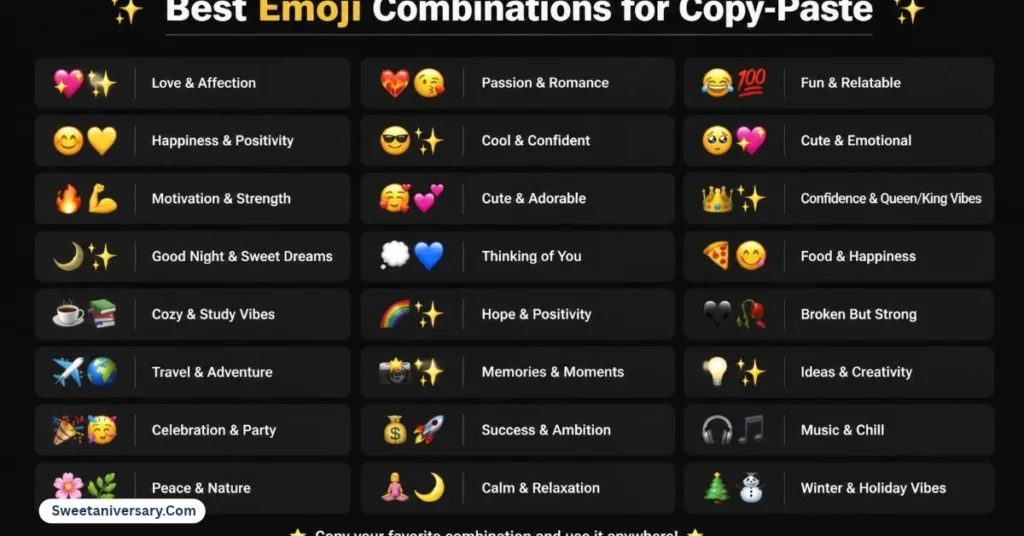
Sometimes, one emoji is enough. Other times, combining two or three emojis makes your reaction more expressive.
Here are ready-to-copy confused emoji combinations for texting, captions, comments, and statuses.
Simple confused emoji combinations
😕🤔
Confused and thinking
Copy
😕❓
Unsure and asking a question
Copy
🤔❓
Looking for an answer
Copy
😵💫❓
Completely puzzled
Copy
😕💭
Thinking about something confusing
Copy
😶🌫️🤔
Feeling mentally foggy
Copy
🤨😕
Doubt mixed with confusion
Copy
😕🧐
Trying to understand the details
Copy
Funny confused emoji combinations
😵💫😂
Confused but laughing
Copy
😕🤣
Something makes no sense
Copy
😭🤔
Dramatic confusion
Copy
😵💫💀
A chaotic or unbelievable moment
Copy
🤨😂
A suspicious but funny reaction
Copy
😶❓😂
Speechless and puzzled
Copy
🤯😕
Surprised and confused
Copy
😅🤔
Awkwardly trying to understand
Copy
Cute confused emoji combinations
🥺😕
Cute and uncertain
Copy
😕🩷
Soft and emotional
Copy
🤔🌸
Gentle thinking mood
Copy
😵💫💗
Overwhelmed but sweet
Copy
😕🎀✨
Cute aesthetic confusion
Copy
🤔🧸
Sweet and thoughtful
Copy
😶🌫️☁️
Dreamy and puzzled
Copy
😕🦋🤍
Soft, delicate style
Copy
Confused emoji combinations with words
Copy these short messages when you want your reaction to feel more personal.
- Wait, what? 😕❓
- My brain needs a break 😵💫
- I have so many questions 🤔❓
- Please explain this to me 😭🤔
- That makes zero sense 😕😂
- I was not ready for that 😵
- Still trying to understand 🤔💭
- Can someone explain the context? 😶🌫️
- Me pretending I understand 😅🤔
- Processing everything right now 😵💫💭
These messages work especially well in WhatsApp conversations, Instagram comments, group chats, and casual replies.
Aesthetic emoji ideas for social media
Confused emojis can add personality to Instagram captions, TikTok videos, WhatsApp statuses, and creative bios. Whether you prefer a cute look or a funny reaction, the right combination can make your content feel more expressive.
1. Minimalist confused emoji style
A minimalist style works best when you want a clean and simple look.
Copy these ideas:
- 😕
- 🤔
- 😵💫
- 😕…
- 🤔❔
- 😶🌫️
You can use them in short captions, subtle bios, and simple story updates.
2. Soft and pastel emoji combinations
For a gentle aesthetic, combine confused faces with hearts, flowers, clouds, and sparkles.
- 😕🩷🌸
- 🤔🦋💗
- 😵💫☁️🩵
- 😕🎀✨
- 🤔🌷🤍
- 😶🌫️☁️💜
- 😕🫧🩷
- 🤔⭐🌸
These combinations work well with pastel backgrounds, soft photography, and cute social media themes.
3. Instagram caption ideas
A confused emoji can make your captions more relatable and playful.
- Just trying to figure life out 😵💫
- One question, a hundred doubts 🤔
- Confused, but still showing up 😕✨
- Me after reading that message 😭🤔
- I need a user manual for today 😵💫
- Mentally buffering… 😶🌫️
- No thoughts, just questions 😕❓
- When the plan makes absolutely no sense 🤨
4. TikTok reaction ideas
TikTok videos often use expressive reactions to highlight surprising, funny, or unexpected moments.
Try these combinations:
- 😳😕 — For a surprising reveal.
- 🤨😵💫 — For something strange or suspicious.
- 😭🤔 — For a confusing but funny moment.
- 😵💫💀 — For an unbelievable situation.
- 😕❓ — For a moment that leaves you with questions.
- 🤯🤔 — For a surprising discovery.
Example comment:
“Wait, can someone explain that ending? 😵💫😭”
These reactions are useful for relatable videos, comedy clips, puzzles, and unexpected plot twists.
5. WhatsApp status ideas
Want to show your mood without writing a long status? Try these short options.
- Current mood: 😕
- Brain loading… 🤔⏳
- Too many questions, not enough answers 😵💫
- Trying to figure it all out 😕💭
- Confused but curious 🤔✨
- What is happening today? 😭😕
- Processing… please wait 😶🌫️
- Life needs subtitles sometimes 😵💫
You can personalize these ideas with your favorite colors, symbols, and emojis. Keep your combinations simple if you want your status to look clean and easy to read.
Common problems and solutions
Although confused emojis are easy to use, they can sometimes cause misunderstandings. Their appearance can vary between devices, and their meaning can change depending on the message.
Here are common issues and ways to solve them.
1. Why does the confused emoji look different on my phone?
Apple, Google, Samsung, Microsoft, and other platforms may use different artwork for the same emoji.
The eyes, mouth, colors, and facial expression may look slightly different. However, the basic meaning is usually similar.
Solution: Add a few words to explain your message. For example, “I am not sure what you mean 😕” is clearer than sending the emoji alone.
2. Why is the confused emoji showing as a box?
An emoji may appear as a blank box, question mark, or missing symbol when a device, app, font, or operating system does not support it correctly.
Solution:
- Update your phone’s operating system if an update is available.
- Update your messaging app.
- Try copying the emoji from a supported emoji keyboard.
- Check whether the recipient’s device supports that emoji.
- Use a simpler emoji if the issue continues.
Newer emoji sequences may not display properly on older devices.
3. Does 😕 mean sadness or confusion?
It can communicate either feeling, depending on the context.
The 😕 emoji commonly expresses uncertainty, puzzlement, or mild disappointment. It does not always mean that someone is sad.
Solution: Read the surrounding message before interpreting the emoji. If the meaning is unclear, ask the sender what they meant.
4. What is the difference between 😕 and 🤔?
The two emojis express related but different feelings.
| Emoji | Meaning |
|---|---|
| 😕 | Confusion or uncertainty |
| 🤔 | Thinking or questioning |
| 😵💫 | Feeling overwhelmed or disoriented |
| 🤨 | Doubt or suspicion |
| 😶🌫️ | Mental fog or feeling lost |
Solution: Choose the emoji that matches your reaction. Use 🤔 when considering an idea, 😕 when something is unclear, and 😵💫 when a situation feels overwhelming.
5. Can the confused emoji sound rude?
Yes. Sending 😕 by itself in response to serious news can sometimes make the other person unsure whether you are concerned, disappointed, or dismissive.
Solution: Add a short, kind sentence to explain your reaction.
Instead of sending only:
😕
Try:
“I am not sure I understand. Could you explain a little more? 😕”
The second message makes your intention clearer.
6. Why do some emoji combinations not display correctly?
Some emoji combinations contain multiple characters joined into a single sequence. Different platforms may support these sequences differently.
Solution: Use simple combinations such as 😕🤔, 😵💫❓, or 🤨😕. If a combination appears incorrectly, try sending the emojis separately.
Trending emoji usage in 2026
Confused emojis remain useful for relatable reactions, funny captions, group chats, and short-form social media content in 2026. Their appeal is simple: they help people express a feeling quickly.
There is no single emoji combination that guarantees a post will go viral. The best choice depends on your audience, content, and personal style.
1. Confused emoji memes
Confused faces work naturally in memes about everyday problems, unexpected news, and situations that seem impossible to understand.
Try these captions:
- When the instructions are harder than the task 😵💫
- When everyone understands except you 😕
- When the plot twist changes everything 🤔
- When someone says, “It is very simple” 😭😵💫
- When you open the group chat after one hour 💀🤔
These examples work because they turn familiar experiences into funny, relatable reactions.
2. Confused and thinking emoji combinations
The combination 🤔😕 is useful when you want to express both curiosity and uncertainty.
Examples:
- When the answer looks right, but something feels wrong 🤔😕
- Trying to understand the assignment 🤔📚
- Reading that message for the fifth time 😕🤔
- When you need more context 🤔❓
These combinations fit study posts, question threads, puzzles, and everyday conversations.
3. Overwhelmed emoji reactions
The 😵💫 emoji is a popular choice for expressing information overload or a chaotic situation.
Examples:
- Five assignments due tomorrow 😵💫
- Reading the group chat after being away all day 😵💫
- Trying to understand every new update 😵💫
- Making plans with ten different people 😵💫
- When the instructions have twelve steps 😭😵💫
People also use this emoji humorously when they feel mentally overloaded by ordinary tasks.
4. Confused emojis in social media comments
Short reactions are convenient when you want to respond quickly to a video or post.
Copy these examples:
- What am I looking at? 😭🤔
- I have so many questions 😕❓
- Please explain the ending 😵💫
- I need context for this 🤨
- Did I miss something? 😕
- My brain cannot process this 💀🤔
- Someone help me understand 😭😵💫
Use playful reactions on funny content, and choose more thoughtful words when responding to serious topics.
5. Creative emoji captions and bios
You can use confused emojis to show curiosity, humor, or a playful personality.
Here are some ideas:
- Curious mind, confused thoughts 🤔✨
- Currently processing… 😵💫
- Questions first, answers later 😕💭
- A little lost, still learning 🌸🤔
- Powered by curiosity and confusion 😵💫☁️
- Too curious to stop asking questions 🤔🦋
These are creative caption ideas rather than verified viral trends. Social media styles change quickly, so choose combinations that feel natural to you.
FAQs about the confused emoji
1. What is the confused emoji?
The 😕 emoji is commonly used to express confusion, uncertainty, doubt, or mild disappointment. Its exact meaning depends on the conversation.
2. What does 😕 mean from a girl or a boy?
It generally means confusion, uncertainty, or disappointment, regardless of who sends it. Read the message and context before assuming a deeper meaning.
3. What is the best confused emoji to copy and paste?
The 😕 emoji is a simple choice for mild confusion. Use 🤔 for thinking or 😵💫 for feeling overwhelmed.
4. What does 😵💫 mean in texting?
It often expresses feeling overwhelmed, mentally confused, dizzy, or unable to process a situation. It can also be used as a humorous reaction.
5. Can I use confused emojis on Instagram and TikTok?
Yes. You can use them in captions, comments, stories, bios, and video descriptions. Choose combinations that match your content and intended tone.
6. Why does the confused emoji look different on different devices?
Different platforms use their own emoji designs. The expression may vary slightly between devices, even when the underlying emoji is the same.
The confused emoji 😕 is a simple way to express uncertainty, ask questions, or react to unexpected moments. Whether you are chatting with friends, creating a funny caption, or searching for copy-and-paste combinations, the right emoji can make your message more expressive.
Use 😕 for mild confusion, 🤔 when you are thinking, and 😵💫 when a situation feels overwhelming. Add hearts, sparkles, or question marks to create a style that fits your personality.
Most importantly, let your emojis support your words. A little context can make your message clearer, friendlier, and easier to understand.
Conclusion: Confused Emoji 😕
The confused emoji 😕 is a simple way to express doubt, uncertainty, and unexpected reactions without using too many words.
Whether you are chatting with friends, sharing an Instagram caption, or replying to a confusing message, this emoji helps show exactly how you feel.
You can also try 🤔, 😵💫, and 🤨 to express different levels of confusion. Copy your favorite confused emoji combinations and use them in Whats-app, Ticktock, and other social media posts.
😕✨ Still confused about which emoji to use? Explore our confused emoji collection, find your perfect expression, and make every message more fun, clear, and relatable!