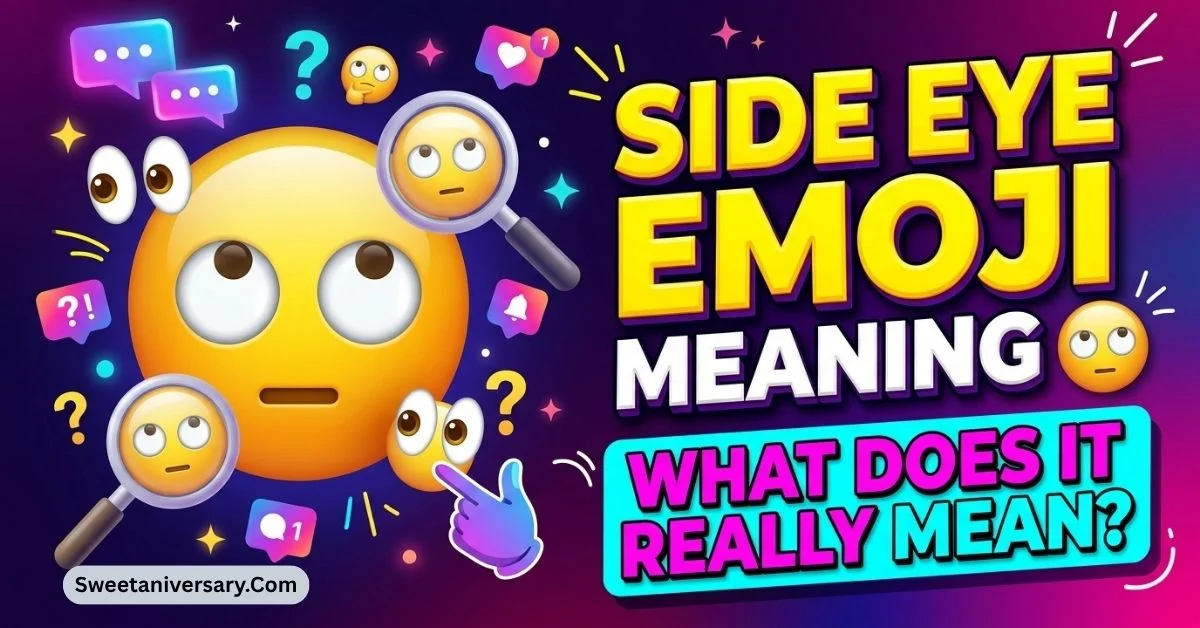
The side eye emoji is used to express suspicion, skepticism, judgment, sarcasm, or disbelief.
There is no single official emoji named “side eye,” but 🙄, 😒, 🤨, and 👀 can convey different types of side-eye reactions.
The best choice depends on whether you want to sound annoyed, doubtful, curious, or playfully judgmental in a text or social media post.
Key Takeaways
- The side eye emoji often communicates doubt, suspicion, sarcasm, or silent judgment.
- 🙄 is useful for annoyance, while 🤨 suggests skepticism and 👀 can show curiosity.
- You can copy and paste these emojis into texts, comments, captions, and chats.
- The meaning depends on the conversation, the relationship, and the emoji combination.
- A playful side-eye reaction can be funny, but it may sound rude in serious conversations.
What Does the Side Eye Emoji Mean?
The side eye emoji represents the look someone gives when they do not fully believe what they hear, feel suspicious, or silently judge a situation. It can also communicate disbelief, awkwardness, sarcasm, or playful disapproval without requiring a long response.
Imagine your friend says, “I’m only going to buy one thing,” and then leaves the store with five shopping bags. You might reply:
“Just one thing, huh? 🙄”
The emoji adds a sarcastic reaction that words alone might not express as clearly.
People use side-eye expressions across texting apps, social media platforms, group chats, and comment sections. The exact meaning can change depending on the conversation. Between close friends, it may be a joke. During an argument, the same emoji might feel dismissive.
One important detail: side eye is an expression, not the official name of one specific emoji. The Unicode emoji name for 🙄 is “Face with Rolling Eyes.” Its common meanings include annoyance, boredom, disbelief, and disapproval.
Side Eye Emoji Copy and Paste
Want to use a side-eye reaction immediately? Copy one of these options.
🙄
Rolling eyes
Annoyance, sarcasm, or “Seriously?”
Copy
😒
Unamused face
Disappointment, irritation, or disapproval
Copy
🤨
Raised eyebrow
Doubt, suspicion, or questioning a claim
Copy
👀
Eyes
Curiosity, attention, or noticing something suspicious
Copy
😏
Smirking face
Knowing looks, teasing, or sly sarcasm
Copy
Tap Copy beside any emoji, then paste it into your preferred messaging app or social platform. These symbols are commonly supported on modern devices, although their appearance can vary by operating system and app.
How to Use the Side Eye Emoji in Texting
The easiest way to understand this emoji is to see how people use it in everyday conversations.
Showing Suspicion or Doubt
Use a side-eye reaction when a statement sounds questionable or a situation does not seem quite right.
Examples:
- “You finished the whole project in five minutes? 🤨”
- “He said he forgot his phone again. 🙄”
- “Something about that story isn’t adding up. 👀”
These messages express doubt without directly accusing anyone of lying.
Expressing Sarcasm or Judgment
The emoji can make a sarcastic comment more obvious, especially when a friend makes an exaggerated claim.
Examples:
- “I’m never spending money again. Says the person shopping tomorrow 🙄”
- “Oh, you’re suddenly an expert now? 😒”
- “You said you’d be here ten minutes ago. Interesting. 🙄”
This style usually works best when both people understand each other’s humor.
Reacting to Awkward Situations
Sometimes, a side-eye reaction says what you are thinking when a situation becomes uncomfortable or surprising.
Examples:
- “My boss scheduled a meeting for 6 a.m. 👀”
- “They started arguing in the middle of the restaurant. 😬👀”
- “Everyone heard that comment, right? 🤨”
You can also use the emoji on its own when the context already makes your reaction clear.
For example, if a friend sends a suspicious screenshot, replying with just “👀” can suggest that you want to know more.
Which Emoji Is Best for Side Eye?
Several emojis can communicate a side-eye expression, but they do not all carry the same tone.
| Emoji | Main meaning | Best use |
|---|---|---|
| 🙄 | Annoyance or disbelief | Responding to an irritating comment |
| 😒 | Disapproval or irritation | Showing that you are unimpressed |
| 🤨 | Skepticism or doubt | Questioning a surprising statement |
| 👀 | Curiosity or attention | Reacting to gossip or unexpected news |
| 😏 | Slyness or teasing | Making a playful or suggestive comment |
These are common interpretations rather than fixed rules. A person’s intended meaning may be different depending on the surrounding message.
Side Eye vs. Rolling Eyes
The terms are related, but they describe slightly different expressions.
Side eye generally means looking sideways at someone or something, often with suspicion or judgment. Rolling eyes usually involves moving the eyes upward to communicate annoyance, exasperation, or disbelief.
The 🙄 emoji is officially called “Face with Rolling Eyes,” making it a natural choice for an exasperated reaction. It may not perfectly represent the sideways glance people have in mind when they search for a side-eye emoji.
Side Eye vs. Eyes Emoji
The 👀 emoji focuses on the eyes themselves rather than an annoyed facial expression.
Use 👀 when you are curious, notice something interesting, or want someone to reveal more information.
For example:
- “Wait, what happened next? 👀”
- “I saw that comment. 👀”
Use 🙄 when you want to emphasize annoyance or disbelief instead.
Side Eye vs. Raised Eyebrow
The 🤨 emoji is often the better option when you are questioning whether something is true.
For example:
“Your flight leaves in two hours, and you haven’t packed? 🤨”
It communicates skepticism without necessarily suggesting anger. If you want to question someone’s claim rather than show frustration, 🤨 is often a clearer choice.
Side Eye Emoji Combinations
Combining emojis can make your reaction more specific, funny, or dramatic. Here are some popular combinations you can try in messages and social media captions.
| Emoji combination | Suggested meaning | Example |
|---|---|---|
| 🙄💅 | Sassy or unimpressed | “Not my problem 🙄💅” |
| 👀🍿 | Watching drama unfold | “I’m staying out of this 👀🍿” |
| 🤨❓ | Questioning something | “You really believe that? 🤨❓” |
| 😒🙄 | Strong disapproval | “Here we go again 😒🙄” |
| 👀🤫 | Keeping an eye on a secret | “I know something you don’t 👀🤫” |
| 😏👀 | Teasing or suggestive curiosity | “Oh, really? 😏👀” |
| 🙄😂 | Playful annoyance | “You’re so dramatic 🙄😂” |
These combinations are creative ways to express tone rather than official emoji definitions. Their meaning depends on the message and the people involved.
For social media creators, emoji combinations can also help communicate a reaction quickly in captions, comments, and short-form posts.
Why Is Side Eye Popular Online?
Side eye is popular because it expresses a reaction that can be difficult to put into words. A sideways glance can communicate suspicion, judgment, disbelief, or amusement without starting a long conversation.
The expression also works well in memes and reaction posts. Imagine someone posting an unbelievable excuse or an awkward moment. A simple “🙄” or “👀” can express a response that many readers immediately understand.
Another reason is flexibility. The same reaction can be playful between friends, sarcastic in a comment section, or critical during a disagreement.
However, there is an important difference between a face-to-face expression and an emoji. In person, people can use their voice, facial movements, and body language to explain their intentions. In a text message, those clues are missing. As a result, a short emoji response can sometimes sound harsher than intended.
If you are messaging a coworker, client, or someone you do not know well, consider using a clearer sentence instead of relying on a potentially judgmental emoji.
Frequently Asked Questions
What does the side eye emoji mean from a girl or a guy?
It can mean suspicion, teasing, disbelief, annoyance, or playful judgment, regardless of who sends it. For example, a friend might send 🙄 as a joke, while someone in a serious conversation might use it to show irritation. Read the message and relationship together rather than assuming the emoji reveals romantic interest or a specific emotion.
Which emoji looks most like a side eye?
There is no single official side-eye emoji. The 🙄 emoji works well for an exaggerated, annoyed reaction, while 😒 and 🤨 can express disapproval or suspicion. The 👀 emoji is useful for a curious or watchful reaction. Choose the symbol that best matches the emotion you want to communicate.
What does 🙄 mean in texting?
The 🙄 emoji commonly expresses annoyance, impatience, boredom, sarcasm, or disbelief. Someone might send it after hearing an excuse they find unconvincing or a comment they consider irritating. It can also be playful among friends. The surrounding conversation helps determine whether the sender is joking or genuinely frustrated.
Is the side eye emoji rude?
It can be. The emoji may appear dismissive, judgmental, or disrespectful when used during a serious discussion. However, friends often use it to tease each other or react humorously to something unexpected. If you are unsure how the recipient will interpret it, add a short explanation or choose a more neutral response.
How do I copy and paste a side eye emoji?
Choose an emoji from the copy-and-paste section above, tap its Copy button, and paste it into your message, caption, or comment. You can also open your device’s emoji keyboard and search for terms such as “rolling eyes” or “raised eyebrow.” The available search features depend on your device.
What is the difference between 👀 and 🙄?
The 👀 emoji usually suggests curiosity, attention, surprise, or interest in something happening. The 🙄 emoji more often expresses annoyance, exasperation, or disbelief. For example, use 👀 when someone shares unexpected gossip and 🙄 when someone repeats an excuse that frustrates you.
Conclusion
The side eye emoji is a simple way to express suspicion, sarcasm, disbelief, curiosity, or judgment in digital conversations.
Although there is no single official emoji for every side-eye expression, 🙄, 😒, 🤨, and 👀 offer useful alternatives for different situations.
Choose your emoji based on the tone you want to convey. Use 👀 for curiosity, 🤨 for doubt, and 🙄 for an exaggerated reaction.
When you understand these differences, your texts and social media posts become easier to interpret and more expressive.