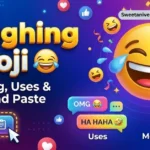
The laughing emoji 😂, officially called Face With Tears of Joy, represents laughter, amusement, and something extremely funny.
People use it in text messages, social media comments, and online conversations to react to jokes, memes, and funny situations. Other popular laughing emojis include 🤣, 😆, 😅, and 😹, each expressing a slightly different mood.
Key Takeaways
- 😂 is the classic laughing emoji for jokes, funny videos, and amusing conversations.
- 🤣 usually expresses more exaggerated or uncontrollable laughter.
- 😆 communicates a big, playful laugh, while 😅 often suggests nervousness or relief.
- Laughing emojis can make messages feel friendly, but their meaning depends on context.
- You can copy and paste laughing emojis directly into texts, captions, comments, and social media posts.
What Does the Laughing Emoji 😂 Mean?
The laughing emoji 😂 is a popular way to show that something is funny. Its official Unicode name is Face With Tears of Joy, and its design represents a face laughing so hard that tears appear in its eyes.
In everyday digital communication, this emoji can express several feelings:
- Genuine laughter: Something made you laugh out loud.
- Amusement: You find a joke, video, or situation entertaining.
- Playful teasing: You are joking with a friend.
- Relatable humor: Someone describes a situation you have experienced.
- Lighthearted reactions: You want your message to feel less serious.
For example, imagine your friend sends you a video of a dog trying to climb onto a sofa and accidentally sliding backward.
You might reply:
“That dog gave up so fast 😂”
The emoji makes your reaction feel playful and shows that you found the video funny.
However, the laughing emoji does not always mean someone is literally laughing. People also use it to soften a message, exaggerate a reaction, or communicate humor in an otherwise ordinary conversation.
Laughing Emojis to Copy and Paste
Looking for a laughing emoji to use right now? Here are popular options you can copy and paste into your messages.
😂Laughing with tearsCopy emoji
🤣Rolling laughterCopy emoji
😆Big happy laughCopy emoji
😅Awkward laughterCopy emoji
😄Friendly smileCopy emoji
😹Laughing catCopy emoji
Select an emoji to copy it. You can then paste it into your preferred messaging app or social media platform.
You can also use these combinations:
- 😂😂 — That is really funny.
- 🤣🤣🤣 — I cannot stop laughing.
- 😂😭 — I am laughing so hard that I am crying.
- 😆😂 — A happy, energetic reaction.
- 😅😂 — That was awkward but funny.
- 😂💀 — That was unbelievably funny.
These combinations are informal expressions, so their meanings can change between communities and conversations.
Different Laughing Emojis and Their Meanings
Although laughing emojis look similar, each one can communicate a slightly different emotion.
😂 Face With Tears of Joy
This is the classic laughing emoji. It works well when something is genuinely funny, whether it is a joke, a meme, or an amusing conversation.
Example: “I just watched that video three times 😂”
Use it when you want to express strong amusement without making your reaction feel overly dramatic.
🤣 Rolling on the Floor Laughing
The 🤣 emoji represents a more exaggerated form of laughter. Its official name is Rolling on the Floor Laughing.
It is useful when something seems ridiculously funny or you want to emphasize how hard you are laughing.
Example: “He walked into the room and forgot why he came in 🤣”
Compared with 😂, this emoji often feels more energetic and dramatic.
😆 Grinning Squinting Face
The 😆 emoji features a wide grin and tightly closed eyes. It commonly conveys a strong, happy laugh or playful excitement.
Example: “We laughed about that all night 😆”
Choose this option when you want a cheerful reaction without the tears shown in 😂.
😅 Grinning Face With Sweat
The 😅 emoji combines a grin with a drop of sweat. It is often used for nervous laughter, embarrassment, relief, or an awkward situation.
Example: “I almost sent that message to the wrong group chat 😅”
Here, the emoji communicates relief and a little embarrassment rather than pure amusement.
😄, 😁, and 😹
Other emojis can add variety to your messages.
- 😄 Grinning Face With Smiling Eyes: A warm, cheerful smile that can accompany a funny conversation.
- 😁 Beaming Face With Smiling Eyes: Excitement, happiness, or a broad grin.
- 😹 Cat With Tears of Joy: A playful laughing reaction featuring a cat’s face.
The best option depends on whether you want to express laughter, happiness, awkwardness, or a playful mood.
😂 vs. 🤣: What Is the Difference?
Both emojis communicate laughter, but they often create different impressions.
| Emoji | Official name | Common conversational meaning |
|---|---|---|
| 😂 | Face With Tears of Joy | Something is very funny |
| 🤣 | Rolling on the Floor Laughing | Something is ridiculously funny |
| 😆 | Grinning Squinting Face | A big, playful laugh |
| 😅 | Grinning Face With Sweat | Nervous laughter or relief |
| 😄 | Grinning Face With Smiling Eyes | A cheerful, friendly reaction |
| 😹 | Cat With Tears of Joy | Playful or exaggerated laughter |
The main difference between 😂 and 🤣 is the level of exaggeration they can suggest. The first is suitable for everyday humor, while the second often emphasizes a stronger reaction.
Still, there is no strict rule that one emoji must represent a bigger laugh than another. People frequently use them interchangeably.
How to Use Laughing Emojis in Text Messages
Laughing emojis can make digital conversations feel more expressive. The key is choosing an emoji that fits the situation.
1. Reacting to a funny joke
If a friend shares a clever joke, a laughing emoji can be enough to show your reaction.
Example: “Why did you actually do that? 😂”
2. Replying to memes and videos
Funny clips and memes often need a short response rather than a long explanation.
Example: “The ending caught me off guard 🤣”
3. Teasing friends
A laughing emoji can help show that a comment is playful rather than serious.
Example: “You managed to burn toast again 😂”
Use this approach with people who understand your humor. The same comment might sound insulting without the right relationship or context.
4. Sharing embarrassing moments
Sometimes, laughing at yourself makes an awkward situation easier to discuss.
Example: “I waved back at someone who wasn’t waving at me 😅”
5. Writing social media captions
Laughing emojis work well in casual Instagram captions, TikTok comments, Facebook posts, and group chats.
For example:
“POV: You said you would go to bed early, and suddenly it’s 2 a.m. 😂”
Keep your captions natural. One or two relevant emojis usually communicate your reaction without distracting from the message.
What Does the Laughing Emoji Mean From a Girl or Guy?
If a girl or guy sends you 😂, it usually means they found something funny, enjoyed your joke, or want to keep the conversation lighthearted.
However, a laughing emoji alone does not prove romantic interest.
Consider the context:
- After a joke: They probably found it amusing.
- During playful teasing: They may be comfortable joking with you.
- After an awkward message: They might be trying to ease the tension.
- During a flirty conversation: It can contribute to a playful tone, but it is not enough to establish attraction.
For example, if someone replies, “You’re actually hilarious 😂,” they are likely expressing amusement or appreciation. Whether they are flirting depends on the broader conversation and their behavior.
Rather than overanalyzing one emoji, pay attention to the full exchange, the person’s communication style, and whether they make an effort to continue talking.
Can a Laughing Emoji Be Sarcastic or Rude?
Yes. Although 😂 is usually associated with amusement, it can feel sarcastic, dismissive, or insensitive in certain situations.
Imagine telling someone that you had a difficult day and receiving this response:
“Wow, that sounds terrible 😂”
Depending on your relationship, this might seem like friendly teasing or a sign that the other person is not taking your feelings seriously.
A laughing emoji may also seem rude when it follows an argument, a personal mistake, or a serious disclosure.
To avoid misunderstandings:
- Consider the other person’s feelings before adding a laughing emoji.
- Avoid using laughter to dismiss someone’s concerns.
- Use clear words when discussing serious matters.
- Remember that humor does not always translate well through text.
- If a message could sound harsh, rewrite it to make your intention clear.
Emoji meanings are shaped by context, relationships, and personal communication habits. When you are unsure, a simple, supportive response is usually safer than a joke.
Frequently Asked Questions
What does the laughing emoji 😂 mean in a text?
The 😂 emoji usually means that something is funny or amusing. It can show laughter, playful teasing, or a reaction to a joke. In some conversations, it can also soften a comment or express awkward humor. The surrounding words and your relationship with the sender help determine the intended meaning.
What is the difference between 😂 and 🤣?
😂 is called Face With Tears of Joy, while 🤣 is called Rolling on the Floor Laughing. Both represent laughter. The 😂 emoji is commonly used for everyday humor, whereas 🤣 often creates a more exaggerated impression of uncontrollable laughter.
How can I copy and paste a laughing emoji?
Choose an emoji such as 😂, 🤣, 😆, or 😅 from the list in this article. Select and copy the character, then paste it into your text message, social media caption, comment, or other text field. The exact steps may vary depending on your device and application.
Does the laughing emoji mean someone likes me?
Not necessarily. Someone may use 😂 because they enjoy your jokes or feel comfortable talking with you. It can appear in a flirtatious conversation, but it is also common between friends, relatives, and coworkers. Look at the broader conversation instead of treating one emoji as proof of romantic interest.
Can 😂 mean sarcasm?
Yes. The laughing emoji can communicate sarcasm or teasing when the surrounding words suggest that the sender is joking or mocking a situation. However, it is not inherently sarcastic. If you cannot tell whether a message is serious, consider asking the sender what they meant.
Which laughing emoji should I use for something extremely funny?
The 😂 and 🤣 emojis are both good choices. Use 😂 for a familiar laughing reaction or 🤣 when you want a more exaggerated expression. You can also combine them as 😂🤣 for a playful response. There is no universal rule about which one expresses the strongest laughter.
Conclusion
The laughing emoji 😂 is a simple way to express humor, amusement, and playful reactions in digital conversations.
Whether you are replying to a funny text, commenting on a meme, or sharing an embarrassing moment, the right laughing emoji can help communicate your mood.
Choose 😂 for everyday laughter, 🤣 for exaggerated humor, 😆 for a cheerful laugh, and 😅 for awkward or nervous situations. Most importantly, consider the context and the person receiving your message.
Want to use a laughing emoji right away? Copy your favorite from the list above and add it to your next message, caption, or comment.