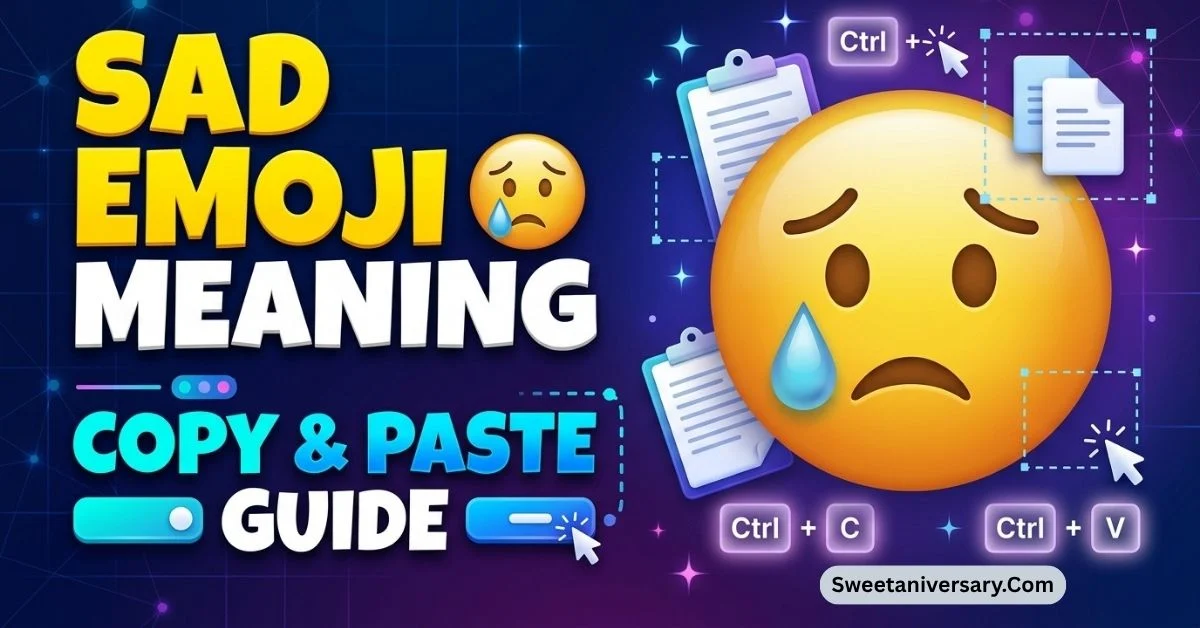
A sad emoji is a digital symbol used to express sadness, disappointment, loneliness, heartbreak, or emotional pain.
The most common sad emoji is 😢, which represents a crying face with a tear. Other popular choices include 😭 for intense crying, 😔 for quiet sadness, and 😞 for disappointment.
You can copy and paste these emojis into text messages, social media posts, and online chats.
Key Takeaways
- 😢 is a common choice for expressing sadness, hurt, or sympathy.
- 😭 represents intense crying but can also express laughter or dramatic reactions online.
- 😔 communicates quiet sadness, regret, or thoughtful disappointment.
- Sad emojis can make text messages feel more personal and emotional.
- The meaning of a sad emoji depends on the conversation, relationship, and context.
What Does the Sad Emoji Mean?
The sad emoji 😢 is a yellow face with a downturned mouth and a tear falling from one eye. It commonly represents sadness, emotional pain, disappointment, or sympathy. According to Emojipedia’s Crying Face explanation, it generally conveys sadness or pain, often less intensely than the loudly crying face.
Meaning, Copy And Paste
People use sad emojis when words alone do not fully express how they feel. For example, someone who receives disappointing news might send 😢 to show that they are upset.
However, the sad emoji does not always indicate deep sadness. It may also communicate mild disappointment, missing someone, or feeling sorry about a situation.
Here are a few examples:
- “I really miss my best friend 😢”
- “My favorite show just ended 😭”
- “I wish things had worked out differently 😔”
- “I’m sorry you’re going through this 😢”
The same emoji can carry different meanings depending on the message. A sad face after bad news may show genuine pain, while one after a minor inconvenience might express playful frustration.
Sad Emojis to Copy and Paste
Looking for a sad emoji to use in your next message? Here is a collection of popular options you can copy directly.
Common Sad Face Emojis
😢
Crying Face
Sadness, hurt, or sympathy.
Copy
😭
Loudly Crying Face
Intense emotions, dramatic sadness, or laughter.
Copy
😔
Pensive Face
Quiet sadness, regret, or loneliness.
Copy
😞
Disappointed Face
Feeling let down or discouraged.
Copy
🙁
Slightly Frowning Face
Mild sadness or dissatisfaction.
Copy
☹️
Frowning Face
Unhappiness or disapproval.
Copy
🥺
Pleading Face
Vulnerability, pleading, or seeking comfort.
Copy
💔
Broken Heart
Heartbreak, emotional loss, or a painful breakup.
Copy
These emojis are useful in everyday conversations, captions, comments, and personal messages. Their exact appearance may vary between Apple, Android, Windows, and other platforms.
Sad Emoji Combinations
Combining emojis can help communicate a more specific feeling without writing a long message.
| Emoji combination | Common meaning |
|---|---|
| 😢💔 | Heartbreak or emotional pain |
| 😭🥺 | Intense sadness or asking for comfort |
| 😔💭 | Sad thoughts or reflection |
| 😞💔 | Disappointment in a relationship |
| 🥺😢 | Feeling vulnerable or needing support |
| 😭💔🥀 | Dramatic heartbreak or lost love |
For example, you might post “Missing the old days 😔💭” when remembering a special moment. Someone dealing with a breakup might use “I thought we would last forever 😢💔.”
These combinations are especially useful when you want a message to feel emotional, relatable, or expressive.
What Is the Difference Between 😢, 😭, and 😔?
Although these three emojis can all communicate sadness, they usually express different levels or types of emotion.
| Emoji | Main meaning | Example |
|---|---|---|
| 😢 | Sadness or hurt | “I miss you 😢” |
| 😭 | Intense crying or dramatic emotion | “That ending destroyed me 😭” |
| 😔 | Quiet sadness or regret | “I wish I could change the past 😔” |
The 😢 emoji is often appropriate when you want to express sadness sincerely without making the situation sound overwhelming.
The 😭 emoji looks more dramatic. It can represent grief, frustration, or intense disappointment. In online slang, it can also mean that something is extremely funny or emotionally overwhelming.
Emojipedia – The Latest Emoji News
+1
The 😔 emoji is more reflective. It often suggests someone is thinking about a difficult situation, feeling regret, or quietly dealing with disappointment.
Meaning, Copy And Paste
There is no strict rule that determines which emoji you must use. Choose the one that best matches the emotion and tone of your message.
When Should You Use a Sad Emoji?
Sad emojis work best when they support the message you want to communicate. The right choice depends on the situation and the person receiving it.
In Text Messages
Text conversations sometimes lack the facial expressions and tone of an in-person conversation. A sad emoji can help show how you feel.
For example:
- “I couldn’t make it to your birthday 😢”
- “I really wanted that job 😞”
- “I wish you were here 😔”
These small symbols add emotional context to otherwise simple sentences.
However, avoid relying on emojis alone when discussing something serious. If a friend is upset, a thoughtful message is usually more helpful than sending several crying faces without explanation.
On Social Media
Sad emojis are commonly used in Instagram captions, TikTok comments, Facebook posts, and other online conversations.
You might use 😔 for a reflective caption, 😭 for a dramatic reaction to a movie, or 💔 when discussing heartbreak.
For example:
“My favorite character deserved a better ending 😭”
This use may express disappointment in an exaggerated, playful way rather than genuine distress.
To Show Sympathy and Support
Sad emojis can help communicate care when someone shares difficult news.
For example:
- “I’m so sorry you’re going through this 😢”
- “Sending you love and support ❤️”
- “I wish I could be there for you 🥺”
When responding to grief or a serious personal loss, use a sincere tone. A simple message of support is often more appropriate than a string of dramatic emojis.
Remember that emojis can support empathy, but they cannot replace listening, kindness, or meaningful conversation.
How to Copy and Paste a Sad Emoji
Copying a sad emoji is simple. Follow these steps:
- Choose an emoji: Select the expression that matches your feeling, such as 😢, 😭, or 😔.
- Copy the symbol: Use the copy button if available, or select and copy the character.
- Open your app: Go to your text messages, Instagram, WhatsApp, Facebook, or another platform.
- Paste the emoji: Place it in your message, caption, bio, or comment.
- Check the context: Make sure the emoji matches the tone of your words.
You can also use your phone’s built-in emoji keyboard. On most smartphones, tap the emoji icon on the keyboard and search for terms such as “sad,” “crying,” or “disappointed.”
On a computer, copying and pasting from a webpage is often the easiest method.
Emoji support can vary across devices and applications, so the artwork may look slightly different to the person receiving your message.
Common Mistakes When Using Sad Emojis
Although sad emojis are easy to use, a few common mistakes can create confusion.
Using 😭 for every emotional situation: This emoji can communicate genuine grief, but it is also widely used for humorous exaggeration. Consider the situation before using it.
Sending too many emojis: A long string of crying faces may make a simple message look overly dramatic. One or two relevant emojis are often enough.
Assuming everyone interprets emojis the same way: Friends may understand your humor, but a coworker or someone you do not know well might interpret the same emoji differently.
Using emojis instead of clear communication: If you need help or feel genuinely upset, explain what happened. Emojis are useful additions, not complete substitutes for words.
Ignoring the seriousness of the conversation: A playful crying face might work in a casual chat but feel inappropriate when someone is sharing painful news.
The best approach is to match the emoji to the relationship, situation, and intended meaning.
Frequently Asked Questions
What is the most popular sad emoji?
The 😢 Crying Face and 😭 Loudly Crying Face are widely recognized choices for expressing sadness. The first often suggests moderate sadness, while the second conveys stronger or more dramatic emotion. Which one is most appropriate depends on the situation and how the recipient interprets emojis.
What does 😢 mean from a girl or a boy?
The 😢 emoji generally communicates sadness, disappointment, sympathy, or emotional hurt, regardless of gender. Its meaning depends on the message and relationship. For example, a friend might use it after receiving disappointing news, while a partner might use it to show that they miss you.
What does 🥺 mean in a sad message?
The 🥺 Pleading Face can express vulnerability, a desire for comfort, or an emotional request. In some conversations, it communicates sadness; in others, it makes a request seem more affectionate or gentle. Read the surrounding words before deciding what the sender intends.
Which emoji represents a broken heart?
The 💔 Broken Heart emoji is the clearest choice for expressing heartbreak, romantic disappointment, or emotional loss. You can combine it with 😢 or 😔 when you want to emphasize sadness. However, the symbol can also refer to disappointment involving friendships, personal goals, or other meaningful experiences.
Emojipedia – The Latest Emoji News
Can I use sad emojis on Instagram and WhatsApp?
Yes. You can generally use standard sad emojis in Instagram captions, comments, direct messages, WhatsApp chats, and many other applications. Copy the emoji or select it from your device’s emoji keyboard. Its design may differ slightly across platforms, but the underlying character is generally the same.
What is the difference between a sad emoji and a crying emoji?
A sad emoji can express unhappiness without showing tears, while a crying emoji usually emphasizes visible tears or stronger emotional distress. For example, 😔 suggests quiet sadness, whereas 😢 and 😭 more directly represent crying. These categories overlap, and their meanings depend on context.
Conclusion
The sad emoji 😢 is a simple way to express sadness, disappointment, hurt, or sympathy in digital conversations. Other options, including 😭, 😔, 😞, 🥺, and 💔, help communicate different emotional tones.
Whether you are writing a text message, creating an Instagram caption, or responding to a friend’s difficult news, choose the emoji that best fits your feelings. Use the copy-and-paste options in this guide to find the right sad emoji quickly.
Remember, the most effective message combines the right emoji with clear, thoughtful words. A small symbol can add emotion to your message, but genuine communication makes the meaning clear.