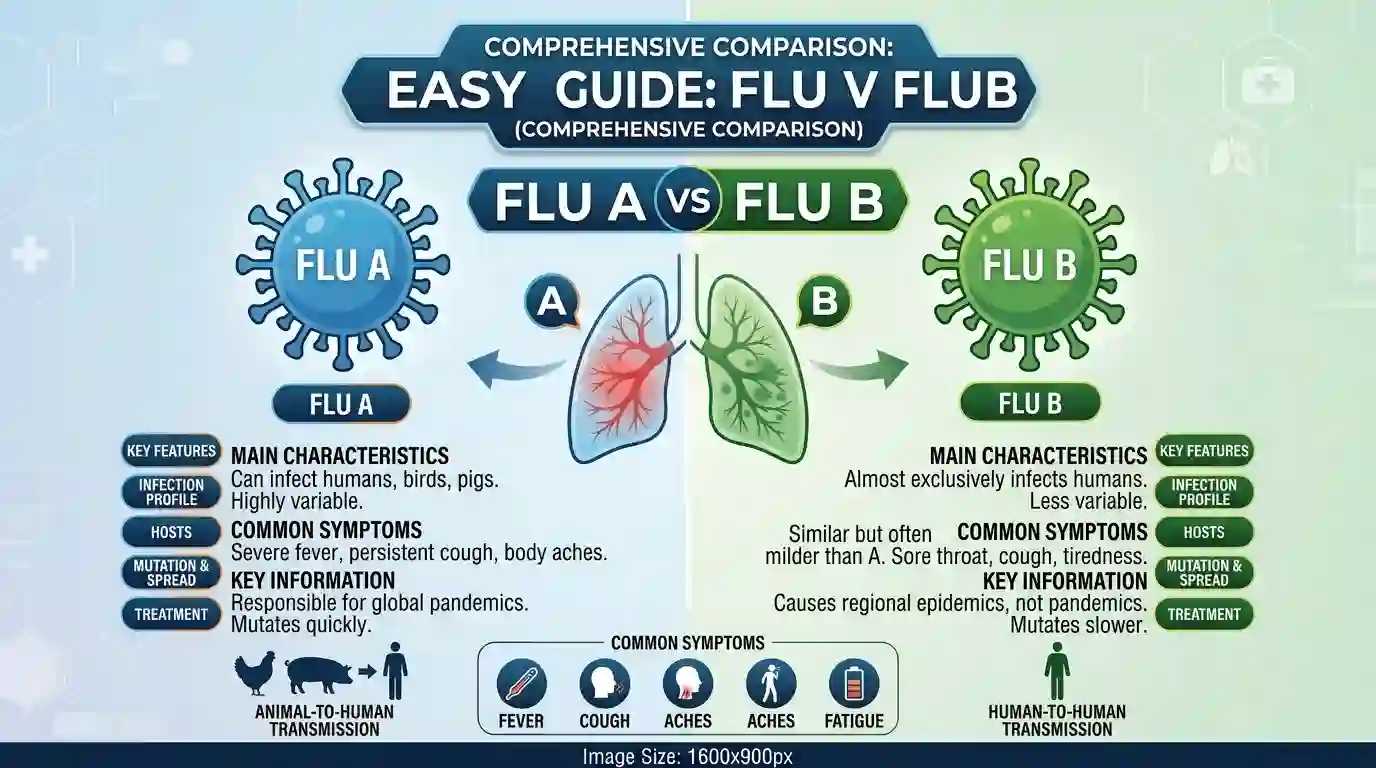
Flu A and flu B are both influenza viruses that cause seasonal flu and can produce similar symptoms, including fever, cough, chills, body aches, headache, and fatigue. Influenza A infects people and some animals and can cause pandemics, while influenza B primarily infects humans and causes seasonal outbreaks. Symptoms alone usually cannot tell you which type you have.
Key Takeaways
- Flu A and flu B can cause very similar symptoms, so symptoms alone usually cannot identify the type.
- Influenza A can infect humans and animals and has caused past pandemics. Influenza B primarily infects humans and causes seasonal outbreaks.
- Flu A is often associated with more cases and severe illness, but flu B can also cause serious complications.
- Antiviral medicines can be used against both influenza A and B. They work best when started early, ideally within 1–2 days of symptoms beginning.
- Testing is the practical way to identify influenza, although some healthcare providers can diagnose flu based on symptoms and the situation.
What Is the Difference Between Flu A and Flu B?
Influenza A and influenza B are the two main types of influenza viruses responsible for seasonal flu in people. They can cause nearly identical symptoms, which is why you generally cannot determine the type simply by how you feel.
The biggest biological difference is their range of hosts. Influenza A can infect humans and several animal species, while influenza B primarily infects humans. Influenza A is also divided into subtypes, such as H1N1 and H3N2. Influenza B is classified into lineages rather than H/N subtypes.
Influenza A
Influenza A viruses include the H1N1 and H3N2 viruses currently circulating among people. They can undergo genetic and antigenic changes and have been responsible for major influenza pandemics, including the 2009 H1N1 pandemic.
Because influenza A can circulate in both humans and animals, new influenza A viruses can sometimes emerge in people. This ability is one reason public health agencies closely monitor influenza A viruses.
Influenza B
Influenza B viruses generally infect humans and are an important cause of seasonal flu. Unlike influenza A, influenza B viruses are not divided into subtypes. They have historically been classified into lineages such as B/Victoria and B/Yamagata, although the viruses currently detected and monitored have changed over time.
Influenza B does not cause pandemics in the same way influenza A does, but that does not mean it is always mild.
Flu A vs Flu B: Symptoms
There is no reliable symptom checklist that lets you say, “This is definitely flu A” or “This is definitely flu B.”
Both can cause:
| Symptom | Flu A | Flu B |
| Fever or feeling feverish | Common | Common |
| Chills | Common | Common |
| Cough | Common | Common |
| Sore throat | Common | Common |
| Runny or stuffy nose | Possible | Possible |
| Body aches | Common | Common |
| Headache | Common | Common |
| Fatigue | Common | Common |
| Vomiting or diarrhea | More common in children | More common in children |
Flu symptoms often begin suddenly and may include fever, chills, cough, sore throat, muscle or body aches, headache, and fatigue. However, not everyone with influenza has a fever. Children are also more likely than adults to experience vomiting or diarrhea.
For most people, uncomplicated influenza improves within several days, although coughing and tiredness can continue longer.
Is Flu A Worse Than Flu B?
This is one of the most common questions about flu A vs flu B.
Influenza A is often associated with more cases and, in some seasons and populations, more severe disease. However, saying that flu A is always worse than flu B is inaccurate. Influenza B can also cause serious illness, hospitalization, pneumonia, and other complications.
Severity depends on more than the influenza type. Age, pregnancy, underlying health conditions, immune status, the particular virus circulating, and other factors can affect the risk of complications.
The CDC notes that influenza can lead to complications including pneumonia, dehydration, worsening of chronic medical conditions, respiratory failure, and other serious problems.
So, if a test shows influenza B, it should not automatically be treated as an insignificant infection.
How Flu A and Flu B Spread
Both influenza A and B are contagious respiratory viruses. Influenza viruses spread mainly through respiratory particles produced when an infected person coughs, sneezes, or talks.
A person can spread influenza before realizing they are sick, which makes prevention difficult during flu season.
Basic precautions include staying home when sick, avoiding close contact with others, improving indoor ventilation when possible, and following current public health guidance.
Flu A vs Flu B: Testing
You generally cannot determine whether you have flu A or flu B from symptoms alone.
Healthcare providers may use influenza tests to detect the virus. Some tests identify influenza A and B separately, while other tests can detect influenza without necessarily identifying the specific type.
The CDC notes that testing is the only way to know for sure that you have influenza, although healthcare providers may diagnose flu based on symptoms and clinical circumstances. Other respiratory infections, including COVID-19, can cause similar symptoms.
Testing can be especially useful when the result could affect treatment decisions or when several respiratory illnesses are circulating.
Treatment for Flu A and Flu B
Treatment is broadly similar for both types.
Antiviral medicines
Prescription antiviral medications can treat influenza A and B. Common options include oseltamivir, baloxavir, zanamivir, and peramivir, depending on the patient and clinical situation.
Antivirals work best when started within 1–2 days after symptoms begin. They may reduce the severity and duration of illness. The CDC especially recommends prompt consideration of antiviral treatment for people at increased risk of serious flu complications.
Antibiotics do not treat influenza because flu is caused by a virus, not bacteria.
Home care
For mild flu, supportive care may include:
- Getting plenty of rest.
- Drinking enough fluids.
- Using appropriate over-the-counter medicines for fever or pain when suitable.
- Staying home and limiting contact with others while sick.
People with severe symptoms or a higher risk of complications should contact a healthcare professional rather than relying only on home treatment.
Can You Get Flu A and Flu B?
Yes, a person can become infected with influenza more than once because different influenza viruses circulate during the same season. Infection with one influenza type does not guarantee protection against every other influenza virus.
It is also possible for a person to encounter different influenza viruses at different times. A previous flu infection should therefore not be considered complete protection against future influenza infections.
Flu A and B Prevention
Annual vaccination is one of the main ways to reduce the risk of influenza and its complications.
For the 2026–2027 U.S. flu season, CDC states that seasonal influenza vaccines are trivalent. They are designed to protect against three influenza viruses, including two influenza A viruses and one influenza B/Victoria virus.
Vaccination does not guarantee that you will never get influenza, but it can reduce the risk of flu and serious complications.
Other prevention steps include avoiding close contact with people who are sick, staying home when ill, covering coughs and sneezes, and practicing good hand hygiene.
When to Seek Medical Care
Most people recover from flu without serious complications, but some people have a higher risk of severe disease.
Seek medical advice promptly if you are at higher risk for complications, develop severe symptoms, or are concerned about your condition.
Emergency warning signs can include difficulty breathing, chest pain or pressure, severe dehydration, confusion, seizures, severe weakness, or symptoms that improve and then become significantly worse. Children can have additional warning signs, including fast breathing, bluish or gray lips or face, dehydration, or significant breathing difficulty.
Frequently Asked Questions
Is flu A more contagious than flu B?
Both influenza A and B are contagious and can spread through respiratory particles. Contagiousness can vary according to the particular virus, timing, setting, and other factors, so there is no simple rule that flu A is always more contagious than flu B.
Which flu lasts longer?
There is no dependable rule that flu A always lasts longer than flu B. Individual recovery varies. Most uncomplicated influenza improves within 3–7 days, although cough and fatigue can last longer.
Can symptoms tell you whether you have A or B?
Usually not. Flu A and B can cause very similar symptoms, including fever, cough, chills, body aches, headache, and fatigue. A test may be needed to identify which influenza type is present.
Can you get flu A twice?
Yes. A previous influenza infection does not provide complete protection against every influenza virus or against future infections. Different influenza viruses and changing strains circulate over time.
Is the flu vaccine designed to protect against both?
Yes. For the 2026–2027 U.S. season, CDC says flu vaccines are trivalent and include protection against two influenza A viruses and one influenza B/Victoria virus.
Conclusion
Flu A and flu B are both important causes of seasonal influenza, and their symptoms can look almost identical. The clearest biological differences are that influenza A infects humans and some animals and is divided into subtypes such as H1N1 and H3N2, while influenza B primarily infects humans and is classified into lineages.
Flu A is often associated with a greater overall impact, but flu B can also cause serious complications. The type of flu does not by itself determine how sick someone will become. If you develop flu symptoms, early medical advice can be especially important if you are at higher risk for complications because antiviral treatment works best when started early.