
The first time I sent the dog emoji 🐶, it was not about a real dog at all. A friend had just done something loyal and funny at once, and no word felt quite right.
That little dog face said it all — warm, playful, and a little cheeky.
The dog emoji feels instantly friendly. It needs no long explanation, yet it can carry many feelings depending on the message around it. Here is what it really means, when to use it, and how to pair it for cute and aesthetic messages.
What does the dog emoji mean?
At its simplest, 🐶 shows the face of a dog, usually a light brown puppy with floppy ears. Most people use it to talk about dogs themselves — a pet, a puppy they saw, a dog video, or a walk in the park. If someone sends you a photo of their dog, replying with 🐶 is a quick way to say you love it.
Beyond pets, it often stands for loyalty, friendship, and playfulness. Dogs stick close to their people, so the emoji can suggest someone is a true friend or loyal companion.
In a romantic message, it feels soft, especially with hearts. In a funny chat, it can mean someone is being silly, like a puppy that just stole a sock.
Context sets the tone: “You are my favourite person 🐶” reads as warm, while “Look who showed up late again 🐶” reads as teasing.
How to use the dog emoji
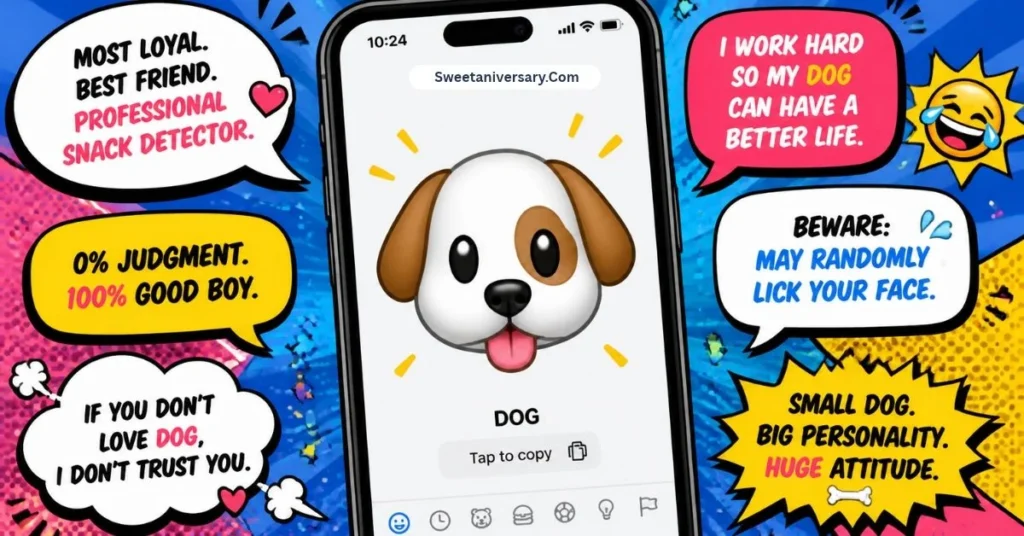
Use 🐶 to add affection, excitement, or humour to a message that is already clear, rather than letting it replace the whole sentence. Try these examples:
- “Happy birthday to the most loyal friend ever 🐶🎂”
- “Miss you so much, my little partner in crime 🐶❤️”
- “Just adopted the cutest puppy today 🐶🥹”
- “Movie night? I will bring snacks 🐶🍿”
- “You always know how to cheer me up 🐶✨”
- “Puppy cuddles fix almost everything 🐶🫶”
On a dog photo, a simple “🐶💛” works beautifully. For an anniversary message, pair it with a shared memory, such as a walk you took together, so it feels personal. In serious messages, one emoji can soften the tone, but a whole row may feel less sincere.
Best emoji combinations for copy paste
These dog combinations are perfect for bios, captions, and quick replies:
- 🐶❤️ — love for a dog or a loyal friend
- 🐶🐾 — puppy love and paw prints
- 🐶🌸 — a soft, cute, springtime vibe
- 🐶🎂🎉 — a birthday shout-out for a dog lover
- 🐶☀️🌳 — a happy walk in the park
- 🐶💤🌙 — a sleepy puppy at bedtime
- 🐶✨💛 — pure joy and good energy
- 🐶🎄🎁 — a festive, cosy holiday mood
A caption like “Sunday walks hit different 🐶☀️🌳” feels relaxed and real, while “My heart in furry form 🐶❤️” feels tender and personal. Mix and match these with your own words to fit the moment.
Aesthetic emoji ideas for social media
The dog emoji fits soft, warm, and nature-inspired aesthetics. For a cosy feed, pair it with cream, beige, and pastel tones, plus flowers, suns, and stars. A bio like “dog lover 🐶 | golden hour chaser ☀️ | coffee first ☕” tells a small story in one line.
For captions, keep the layout clean, with a single emoji cluster at the end.
For example: “Slow mornings, warm light, and a happy pup. 🐶🌿✨” This looks calm and intentional in stories and screenshots.
For a playful look, go brighter, with balloons and confetti. For a minimal look, use just one dog emoji and one heart, and let the photo do the talking.
Common problems and solutions
The dog emoji can look slightly different on different phones — a cute puppy on one device, a more adult dog on another.
The meaning stays the same, but check how it looks on your own device first, and do not rely on tiny details like ear colour to carry the message.
Misunderstanding is another issue. Some people use it as a joke about loyalty, or as a teasing nickname. If you receive it in a confusing context, ask lightly, such as “Haha, what do you mean by that one?” Most of the time, the sender meant it kindly.
Trending emoji usage in 2026
In 2026, 🐶 is trending in pet adoption posts, rescue stories, and feel-good reels. Creators use it to celebrate adopted dogs, share training wins, and post before-and-after glow-ups of rescue pups.
It also appears in friendship content, where people call their best friend their “ride or die” and add 🐶 as a symbol of loyalty.
Another trend pairs it with slow-living content — morning walks, journaling, gardening, and quiet weekends. The emoji adds comfort and companionship, even when no dog is in the photo.
FAQs
What does 🐶 mean in a text from a friend?
Usually affection, loyalty, or playfulness. It can also simply refer to a real dog, and the surrounding words show which meaning fits.
Is the dog emoji only for pet owners?
No. Anyone can use it to show loyalty, friendship, or a fun mood. You do not need to own a dog to send it.
Can I use 🐶 in a romantic message?
Yes, especially for a soft, playful tone. Pair it with a heart or a sweet memory to make it feel romantic.
What is the difference between 🐶 and 🐕?
🐶 shows just the face, which feels cuter and more expressive. 🐕 shows the full body, which feels more like a plain picture of a dog.
Is it okay to use the dog emoji at work?
In casual chats with close colleagues, yes. In formal emails, it is better to skip emojis or use them very sparingly.
Here’s an SEO-friendly, engaging, and CTR-focused conclusion for your Dog Emoji 🐶 article.
Conclusion: Dog Emoji 🐶
The Dog Emoji 🐶 is a cute and playful way to express love for dogs, share happiness, and add a friendly touch to your conversations.
if you’re posting adorable pet pictures, creating Instagram captions, updating your WhatsApp status, or chatting with fellow dog lovers, this emoji makes every message more fun and expressive.
Ready to add some puppy love to your posts? 🐾 Copy and paste your favorite dog emoji combinations, explore creative styles, and make your social media captions stand out. Discover more emoji meanings and find the perfect symbols to show your love for dogs! 🐶❤️